How Blurgs Came Into Existence
We recently celebrated six years of Blurgs, a foundation day gives you a reason to pause and look back: how did we get here, what worked, and what would we think through differently if we were starting again?
Lots of students and aspiring founders often ask me how much they should have figured out before starting a company. A complete business plan? A clear market? A product roadmap? Looking back at our own journey, I understand where the question is coming from. We began with a smart mirror and eventually found our focus in maritime intelligence. Quite a few decisions sit between those two things.
In brief
- We started with complementary skills, someone we trusted, and an idea we could explore.
- Consultancy, solar inspection and maritime work each taught us something different about customers, delivery and the limits of our assumptions.
- Plan the next step carefully. Be willing to reconsider the direction when the work gives you a reason to.
It is easy to tell the story now as a neat sequence of sensible decisions. At the time, we were trying to work out what to do next. Some things worked technically but were difficult to build a business around. Other directions became clearer only after we had spent time on them.
So, if we were discussing whether you should start a company, this is the part of our experience I would want to share.
What Did We Have Figured Out at the Beginning?
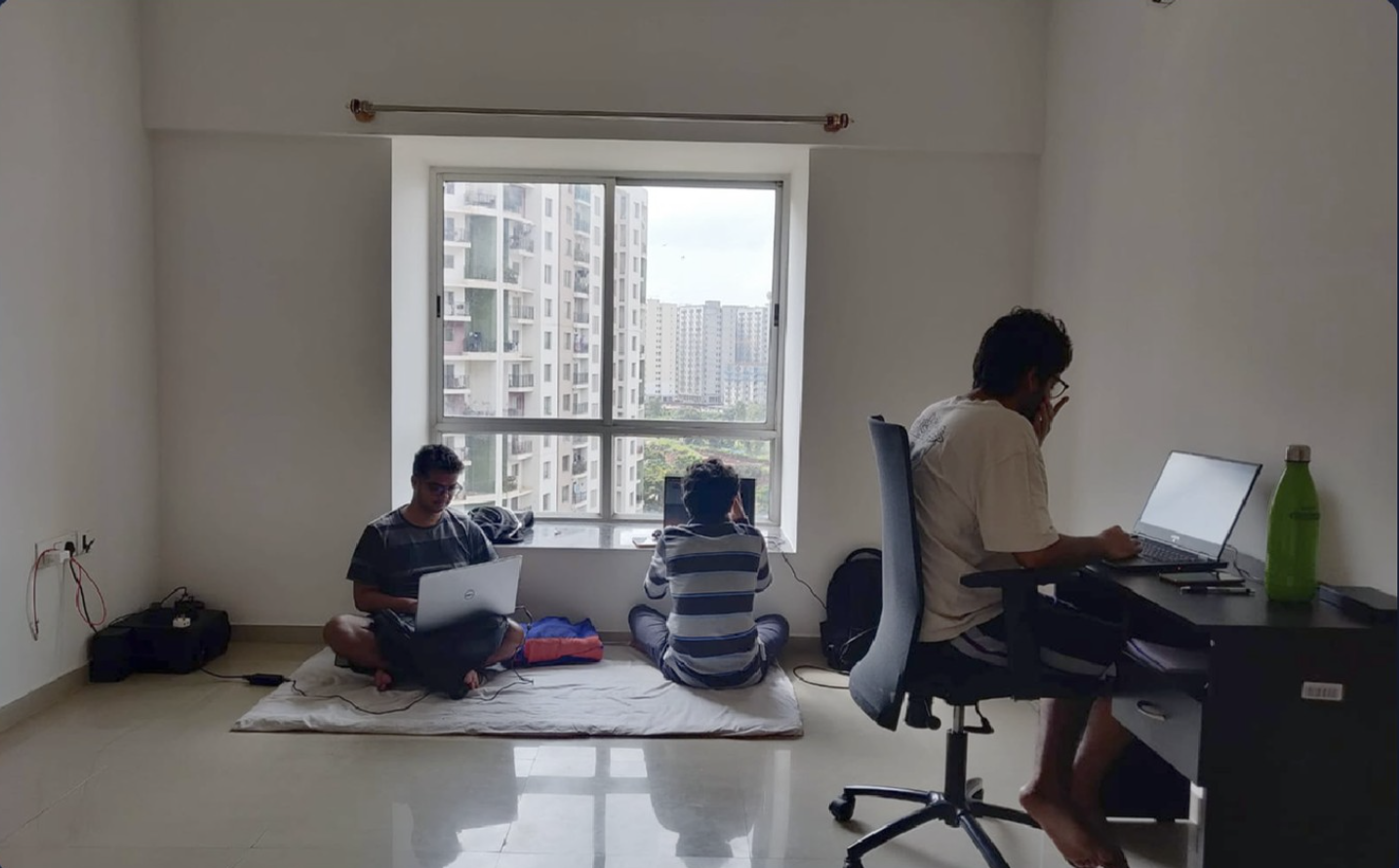
Me and Roshan aare batchmates from IIT Madras and have known each other since 2015. We had both completed six-month internships at Siemens, where we became more familiar with each other’s work and strengths. Roshan was involved in the alumni relations cell and had experience building relationships across the alumni community. My expertise was in computer vision, deep learning and AI. During COVID in 2020, while we were in a lockdown, in one casual call we began discussing whether we could build something together from that experience.
Could his network help us find opportunities and customers? Could I develop the technical solutions? We had a starting point and a practical division of responsibilities. Both of us also had placement options, so this was a choice we had to think about.
Our first idea was a smart apparel system: a mirror that would let someone select an outfit and see themselves wearing it. It grew out of the computer vision work I had previously worked on. Maritime intelligence was a long way from that conversation.
We still had a lot to learn where those capabilities could become a useful business.
What Happened When We Started Doing the Work?
For roughly the first two years, we worked on consultancy projects, particularly in computer vision and drone imagery. We captured and analysed images, counted people, estimated traffic density and explored different applications of image analysis.
There were plenty of technical problems we worked on, the harder question was how to find a foothold in what, in our experience, was a crowded service market. This was one of the first things I had to think about beyond implementation. We could develop a solution, but how would customers find us? Why would they choose us? What would allow the work to grow beyond individual projects?
We started looking for a more focused application of our capabilities. That led us towards inspecting solar panels using drones.
Would a More Focused Problem Make It Easier?
Solar inspection gave us a specific task: process drone imagery, examine individual panels and identify defects. Manik Sharma, one of our other friend, was very actively involved during this phase and helped develop the work.
A clearer technical task helped, as we explored the business, though, we began to understand what delivering it at a larger scale would involve. The service model we were pursuing depended on much wider local coverage, with centres or support across India and potentially other markets.
Could our team build and sustain that infrastructure? What would it cost to deliver the service as we expanded?
Those questions mattered as much as the quality of the analysis. Narrowing the application had helped us understand the business more clearly, and it had exposed another constraint we needed to take seriously.
This is why I hesitate when someone asks whether an idea is “good” based only on the technology. I would also want to understand who needs it, how it reaches them, and what happens to the delivery effort as the business grows. Basically, we need a vision that is idea with an execution plan, idea without an execution plan is just a dream.
How Did We End Up in Maritime?
Around this period, a Government of India’s grant opportunity via iDEX encouraged us to explore AI analysis in open sea. We began learning about maritime problems, and our first project was involving maritime motion-pattern classification.
We were new to the domain, we did not yet fully understand how defence users framed their problems, what they needed operationally, or how they would assess a solution. Much of our early implementation began with what we could infer.
We spent considerable time visually plotting patterns, trying different ways of modelling them and refining the implementation. Evaluations at BEL premises brought a very encouraging feedback on how the model worked.
This experience along with all the learning gave us a clearer direction to pursue. The work became the starting point for Trident, development expanded into a complete maritime domain awareness platform, and the company began to organise itself around that direction.
Looking back, each phase answered a different question. Consultancy made us think about entering the market. Solar inspection made us think about delivery and scale. Maritime work required us to learn how users understood an unfamiliar domain and assess our ideas in that setting.
How Rigid Should the Plan Be?
This is usually where the conversation returns to planning. If the direction changed that much, how much planning was useful in the first place?
We still needed a technical approach, short-term priorities and people who could take responsibility. We needed a practical way to test what we believed. Having no plan would have made those decisions harder.
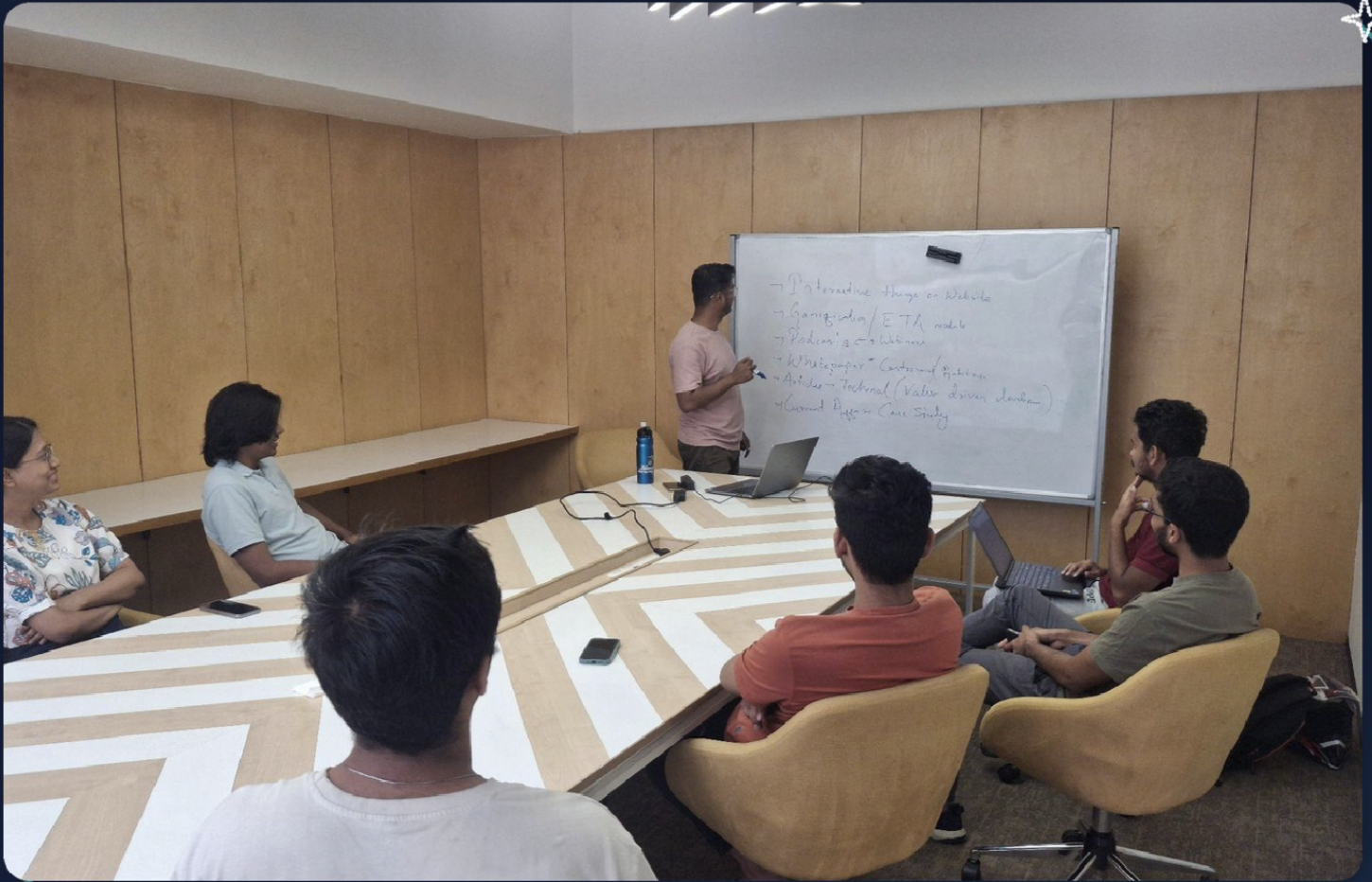
But the plan also had to leave room for what we were learning. We could not know every market constraint or operational requirement before doing the work. Once a constraint became clearer, we had to decide whether it called for another experiment, a narrower customer group, or a different product or delivery approach. The question I would ask is: what have we learned that should change the next decision?
A difficult implementation may deserve more time. A service that becomes expensive to deliver needs a different kind of discussion. It helps to identify which problem you are actually facing before deciding to persist or change direction.
What Would I Tell Someone Starting Now?
I would start with three questions:
- What can you build or test with the people and resources you have now? Keep the first step small enough to carry out.
- What do you most need to learn before committing further? A prototype, a customer conversation and a realistic execution plan.
- What would make you continue, narrow the scope or change direction? Agree on what you are looking for before becoming attached to the plan.
Then give that first direction enough committed effort to learn something useful. Changing direction after every difficult week will not tell you much. Equally, the time already spent on an idea cannot answer whether the next stage makes sense.
It is okay to begin without having everything figured out. Be aware of a “halo syndrome” when speaking to established startup founders, usually a promoter presents themself as the sole origin of the idea, with a complete plan that unfolded exactly as intended. The uncertainty, unsuccessful attempts, changes of direction and other people’s contributions disappear from the telling. What remains sounds like everything was planned and executed with flawless decisions.
That can give someone starting out a misleading expectation: that you should already know the destination, anticipate every constraint, and execute without hesitation. It also leaves out much of what you could actually learn from the journey. Which assumption failed? What did customers teach the team? Who helped change the direction? Why did they persist at one point and reconsider at another?
Six years into Blurgs, I think about the people we started with, the different things we tried, and the conversations that helped us reconsider what we were building. Maritime is our focus today, it is something we arrived at through the work, and we are still learning as we build the company.
If you are at the beginning, plan the next step carefully.
Related Reading
- A Model-Selection Doctrine for Commercial AI - a practical companion on defining the decision an AI system needs to support.